
Introduction
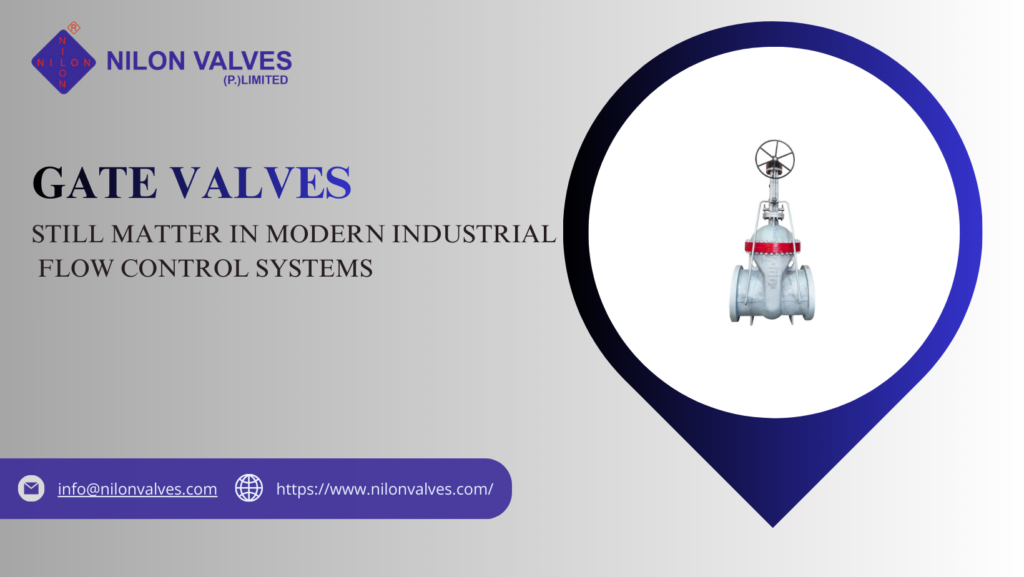
In an era of advanced automation, smart actuators, and high-performance valve technologies, it’s easy to assume that traditional valve types are becoming obsolete. Yet, gate valves continue to play a crucial role in modern industrial flow control systems. Despite the availability of ball, butterfly, and control valves, gate valves remain indispensable in applications that demand reliable shut-off, minimal pressure loss, and long-term durability.
1. Reliable Shut-Off for Critical Operations
One of the primary reasons gate valves still matter is their ability to provide dependable isolation. In critical systems—such as emergency shutdown lines, maintenance bypasses, and main pipeline isolation—reliable shut-off is non-negotiable.
Gate valves offer:
- Full bore opening for complete flow isolation
- Strong sealing between the gate and seats
- Minimal leakage when properly selected and maintained
2. Minimal Pressure Drop in Fully Open Position
Energy efficiency is a major focus in today’s industrial operations. Gate valves excel in this area because, when fully open, they create very little pressure loss compared to other valve types.
This makes gate valves ideal for:
- High-flow applications
- Long-distance pipelines
- Systems where pumping costs must be minimized
3. Essential for Large-Diameter Pipelines
As pipeline diameters increase, valve selection becomes more critical. Gate valves are often the preferred choice for large-diameter pipelines due to their simple design and scalability.
Industries that rely heavily on large gate valves include:
- Water transmission and distribution
- Oil & gas pipelines
- Power plant cooling water systems
4. Compatibility with Modern Materials and Coatings
While the basic operating principle of gate valves has remained unchanged, materials and manufacturing technologies have evolved significantly.
Modern gate valves now feature:
- Advanced alloys for high-pressure and high-temperature services
- Corrosion-resistant materials for aggressive media
- Epoxy, rubber, or metal seating options
- Improved surface finishes and coatings
5. Long Service Life and Durability
Gate valves are known for their robust construction and long operational life. In applications where valves remain either fully open or fully closed for extended periods, gate valves experience minimal wear.
Benefits include:
- Reduced maintenance frequency
- Lower lifecycle costs
- High resistance to erosion in fully open position
6. Continued Relevance in Water and Infrastructure Projects
Global investment in water infrastructure continues to rise, driven by urbanization and sustainability initiatives. Gate valves remain a standard choice in:
- Municipal water supply systems
- Wastewater treatment plants
- Irrigation and desalination projects
7. Integration with Modern Actuation and Automation
Modern industrial systems increasingly rely on automation—and gate valves have evolved to keep pace.
Today’s gate valves can be equipped with:
- Electric actuators
- Pneumatic or hydraulic actuators
- Position indicators and limit switches
- Remote monitoring and control systems
8. Cost-Effective Solution for Isolation Service
While not suitable for throttling, gate valves remain a cost-effective solution for isolation compared to more complex control valves.
They offer:
- Lower initial cost for large sizes
- Simple design with fewer moving parts
- Economical maintenance over long service life
Why Gate Valves Will Continue to Matter
Modern industrial flow control systems are not about replacing old technologies—they are about using the right valve for the right application. Gate valves continue to meet critical requirements where:
- Full bore flow is essential
- Pressure loss must be minimized
- Reliable shut-off is required
- Long-term durability is a priority
Their simplicity, strength, and proven performance ensure they remain a vital part of industrial systems.
Conclusion
Despite rapid technological advancements, gate valves still matter in modern industrial flow control systems. Their ability to provide reliable shut-off, minimal pressure drop, and long-term durability makes them indispensable across industries such as water, oil & gas, power, and infrastructure.