
In today’s industrial landscape, efficiency and durability are no longer optional — they are essential. From water treatment plants and HVAC systems to oil & gas pipelines and chemical processing facilities, flow control equipment must perform reliably under demanding conditions.
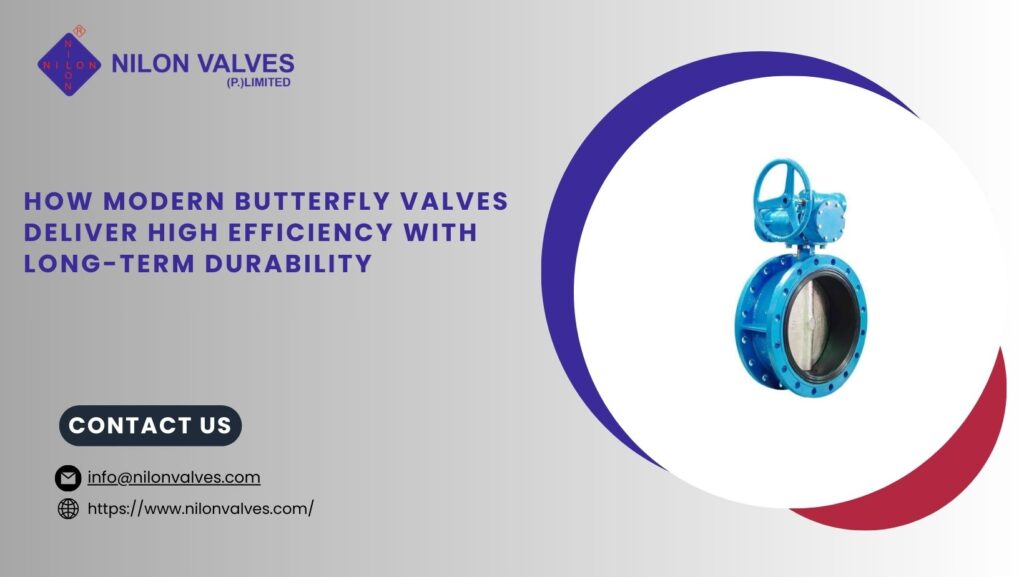
Modern butterfly valves have emerged as a preferred solution because they combine high operational efficiency, compact design, and long-term durability — all while remaining cost-effective.
1. Optimized Flow Design for Maximum Efficiency
One of the biggest reasons butterfly valves are widely used today is their streamlined flow control capability.
Minimal Pressure Drop
Modern butterfly valves are engineered with precision-designed discs and seats that reduce turbulence. Compared to many traditional valves:
- They offer lower pressure loss
- Improve system flow efficiency
- Reduce energy consumption in pumping systems
This makes them ideal for industries aiming to lower operational costs and improve energy performance.
Quick Operation
A 90-degree rotation from fully open to fully closed allows:
- Faster response times
- Improved process control
- Reduced actuator workload
This simplicity increases overall system efficiency.
2. Advanced Materials for Long-Term Durability
Durability begins with material selection. Modern manufacturers now use high-performance materials to extend valve life.
Common Durable Materials Include:
- Ductile iron with epoxy coating
- Stainless steel (SS304, SS316)
- Carbon steel and alloy steels
- PTFE and reinforced elastomer seats
These materials resist:
- Corrosion
- Chemical attack
- High pressure
- Extreme temperatures
As a result, modern butterfly valves can operate reliably in harsh environments for years with minimal degradation.
3. Improved Sealing Technology
Leakage can reduce efficiency and increase maintenance costs. Modern butterfly valves incorporate:
- Precision-machined seats
- Bubble-tight shut-off designs
- Resilient and high-performance seat configurations
- Double-offset and triple-offset technology for metal-seated applications
These innovations ensure:
✔ Reduced leakage
✔ Enhanced sealing performance
✔ Longer service intervals
Better sealing directly contributes to both operational efficiency and durability.
4. Lightweight Yet Strong Construction
Compared to gate or globe valves, butterfly valves are significantly lighter and more compact.
Benefits Include:
- Easier installation
- Lower transportation costs
- Reduced pipeline stress
- Minimal support structure requirements
Despite being lightweight, modern manufacturing techniques ensure structural strength and reliability, even in large-diameter applications.
5. Automation-Ready Design
In the era of Industry 4.0, automation is critical. Modern butterfly valves are designed for easy integration with:
- Electric actuators
- Pneumatic actuators
- Smart positioners
- IoT-enabled monitoring systems
Automation improves:
- Precision control
- Process consistency
- Preventive maintenance planning
This enhances both efficiency and operational lifespan.
6. Low Maintenance Requirements
Butterfly valves have fewer moving parts compared to many other valve types. This simple construction results in:
- Reduced wear and tear
- Lower maintenance frequency
- Easy replacement of seats and seals
- Reduced downtime
For industries operating continuously, this reliability is a major advantage.
7. Versatility Across Applications
Modern butterfly valves are used in:
- Water & wastewater treatment
- Oil & gas pipelines
- Chemical processing plants
- Power generation
- HVAC systems
- Marine and shipbuilding
Their adaptability across industries demonstrates both durability and consistent performance under varied conditions.
8. Cost Efficiency Over the Lifecycle
While initial purchase cost is important, lifecycle cost matters more.
Modern butterfly valves offer:
- Lower installation cost
- Reduced energy consumption
- Minimal maintenance expenses
- Longer operational life
When evaluated over years of operation, they provide excellent return on investment.
Conclusion
Modern butterfly valves deliver high efficiency with long-term durability by combining:
✔ Optimized flow design
✔ Advanced material engineering
✔ Improved sealing systems
✔ Automation compatibility
✔ Low maintenance requirements
Modern butterfly valves represent the perfect combination of performance, reliability, and cost-effectiveness in today’s industrial flow control systems. Their optimized design ensures efficient fluid regulation with minimal pressure loss, while advanced materials and improved sealing technologies guarantee long service life even in demanding environments. With automation-ready features and low maintenance requirements, they help industries reduce downtime and operational costs. As efficiency and durability continue to drive purchasing decisions, modern butterfly valves stand out as a smart, future-ready solution for sustainable and dependable pipeline performance.Top of Form
Also Read: What Makes a Reliable Butterfly Valve Manufacturer? Key Capabilities Explained