
Introduction
Industrial sectors such as oil & gas, petrochemicals, power generation, water treatment, and chemical processing rely heavily on valves to control the flow of fluids and gases. Among the many valve types used in these industries, ball valves manufacturer is widely preferred because of their reliability, tight sealing, and quick operation. However, with growing environmental concerns and stricter regulations on emissions, industries are increasingly focusing on reducing leakage and minimizing environmental impact.
This shift has led to the development of low-emission ball valves, which are specifically engineered to reduce fugitive emissions and ensure compliance with environmental standards. These valves play a critical role in protecting the environment while maintaining operational efficiency and safety in industrial processes.
Understanding Fugitive Emissions in Industrial Systems
Before discussing low-emission ball valves, it is important to understand fugitive emissions. Fugitive emissions refer to the unintended release of gases or vapours from industrial equipment such as valves, pumps, compressors, and flanges.
In many industries, pipelines transport hazardous or volatile substances like hydrocarbons, chemicals, or natural gas. Even small leaks from valves can result in:
- Environmental pollution
- Safety hazards for workers
- Energy losses
- Regulatory penalties
Fugitive emissions commonly occur at valve stem seals, packing systems, and body joints. Over time, wear and tear, temperature changes, and pressure fluctuations can cause traditional valves to leak.
What Are Low-Emission Ball Valves?
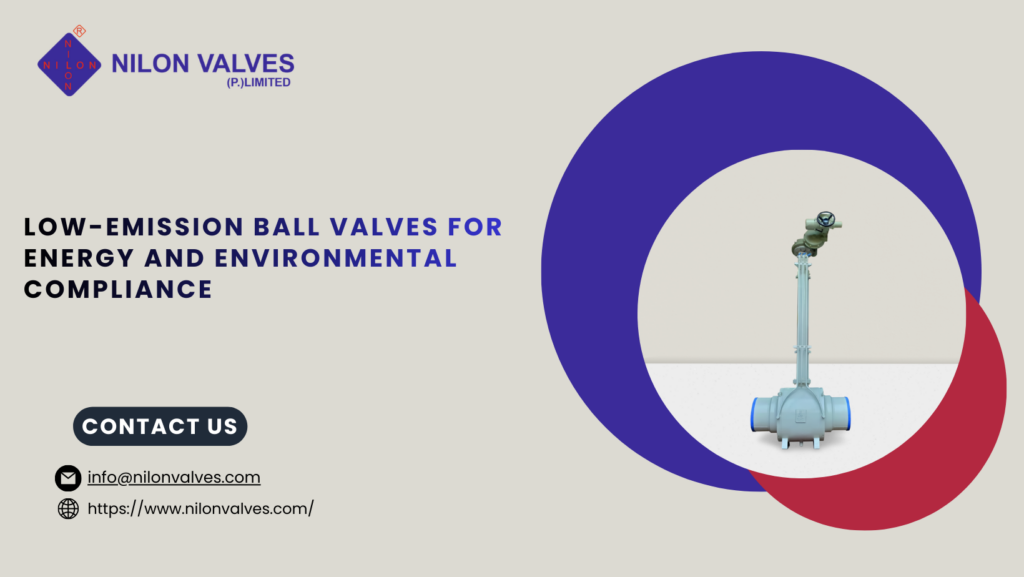
Low-emission ball valves are specially designed valves that significantly reduce or eliminate fugitive emissions. They are engineered with advanced sealing technologies and high-quality materials that prevent leakage even under demanding operating conditions.
These valves are tested and certified according to international emission standards to ensure that leakage levels remain extremely low throughout their operational life.
Unlike conventional valves, low-emission ball valves include enhanced features such as:
- Advanced stem sealing systems
- High-performance packing materials
- Precision manufacturing
- Double sealing mechanisms
- Leak-proof body joints
These design improvements allow industries to control emissions effectively while maintaining efficient flow control.
Importance of Low-Emission Ball Valves in Modern Industries
1. Environmental Protection
One of the main reasons industries are adopting low-emission valves is environmental responsibility. Leakage of volatile organic compounds (VOCs) and greenhouse gases can significantly contribute to air pollution and climate change.
Low-emission ball valves help prevent these harmful gases from escaping into the atmosphere, making industrial processes more environmentally friendly.
2. Compliance with Environmental Regulations
Governments and environmental agencies across the world have implemented strict emission regulations. Standards such as:
- ISO 15848
- API 641
- TA-Luft
- EPA regulations
require industries to minimize fugitive emissions from equipment.
3. Enhanced Safety
Industrial facilities often handle flammable or toxic substances. Even minor leaks can pose serious risks to workers and nearby communities.
By minimizing leakage, low-emission ball valves improve workplace safety and reduce the chances of fire, explosions, or hazardous exposure.
4. Energy Efficiency
Leakage in pipeline systems leads to product loss and energy wastage. For industries transporting natural gas or valuable chemicals, this loss can be significant.
Low-emission ball valves ensure tight sealing and reduce product loss, improving overall energy efficiency and operational profitability.
Key Design Features of Low-Emission Ball Valves
Low-emission ball valves achieve superior sealing performance through advanced engineering and innovative design features.
Advanced Stem Sealing Systems
The valve stem is one of the most common leakage points in conventional valves. Low-emission ball valves use multiple sealing layers and high-performance packing materials to prevent leakage around the stem.
High-Performance Packing Materials
Materials such as graphite, PTFE, and reinforced polymers are commonly used in low-emission valve packing systems. These materials offer excellent resistance to temperature, pressure, and chemical exposure.
Live-Loaded Packing
Many low-emission ball valves incorporate live-loaded packing systems that maintain constant pressure on the sealing components. This ensures consistent sealing performance even as the packing materials wear over time.
Applications of Low-Emission Ball Valves
Low-emission ball valves are widely used in industries where environmental safety and leak prevention are critical.
Oil and Gas Industry
The oil and gas sector handles large volumes of hydrocarbons and natural gas. Even minor leaks can cause environmental damage and financial loss.
Low-emission ball valves are used in:
- Pipelines
- Refineries
- LNG terminals
- Offshore platforms
to ensure safe and efficient operation.
Chemical Processing Plants
Chemical industries often deal with hazardous and corrosive fluids. Low-emission valves help prevent chemical leaks that could harm workers and the environment.
Power Generation
Power plants require reliable flow control systems to manage fuel, steam, and cooling water. Low-emission ball valves ensure safe and efficient energy production.
Also Read: Important Factors to Evaluate Before Selecting a Ball Valve Manufacturer in India
Role of Advanced Materials in Low-Emission Valve Design
Material selection plays a crucial role in achieving low emission performance. Modern ball valves use advanced materials that offer superior durability and corrosion resistance.
Common materials include:
- Stainless steel
- Duplex stainless steel
- Alloy steel
- High-performance polymers
These materials improve the valve’s resistance to harsh chemicals, extreme temperatures, and high pressure, ensuring long-term sealing reliability.
Testing and Certification Standards
Low-emission ball valves undergo rigorous testing to ensure they meet international emission requirements.
ISO 15848
This standard evaluates fugitive emissions from valve stem seals and packing systems under different operating conditions.
API 641
API 641 focuses on testing quarter-turn valves such as ball valves for fugitive emissions in petroleum and natural gas industries.
TA-Luft Compliance
TA-Luft is a German regulation that limits air pollution and requires extremely low emission levels from industrial equipment.
Benefits of Implementing Low-Emission Ball Valves
Industries that adopt low-emission ball valves gain several long-term advantages.
Reduced Environmental Impact
By preventing gas and chemical leaks, these valves significantly reduce environmental pollution.
Lower Maintenance Costs
High-quality sealing systems reduce the frequency of repairs and replacements, lowering maintenance expenses.
Improved Operational Reliability
Low-emission ball valves provide consistent performance and minimize unexpected downtime.
The Future of Low-Emission Valve Technology
As industries move toward sustainability and cleaner energy solutions, the demand for low-emission valves will continue to grow. Manufacturers are investing heavily in research and development to create valves that are even more efficient and environmentally friendly.
Future innovations may include:
- Smart valves with emission monitoring sensors
- Improved sealing materials with longer lifespan
- Integration with industrial automation systems
- Lightweight and compact valve designs
Conclusion
Low-emission ball valves are becoming a crucial component in modern industrial infrastructure. As environmental regulations tighten and industries prioritize sustainability, the need for reliable, leak-free flow control solutions continues to grow.
By incorporating advanced sealing technologies, durable materials, and precision engineering, low-emission ball valves help industries reduce fugitive emissions, improve safety, and comply with global environmental standards.
For sectors such as oil and gas, chemical processing, power generation, and water treatment, adopting low-emission ball valves is not just a regulatory requirement—it is a strategic step toward responsible and sustainable industrial operations.