
Introduction
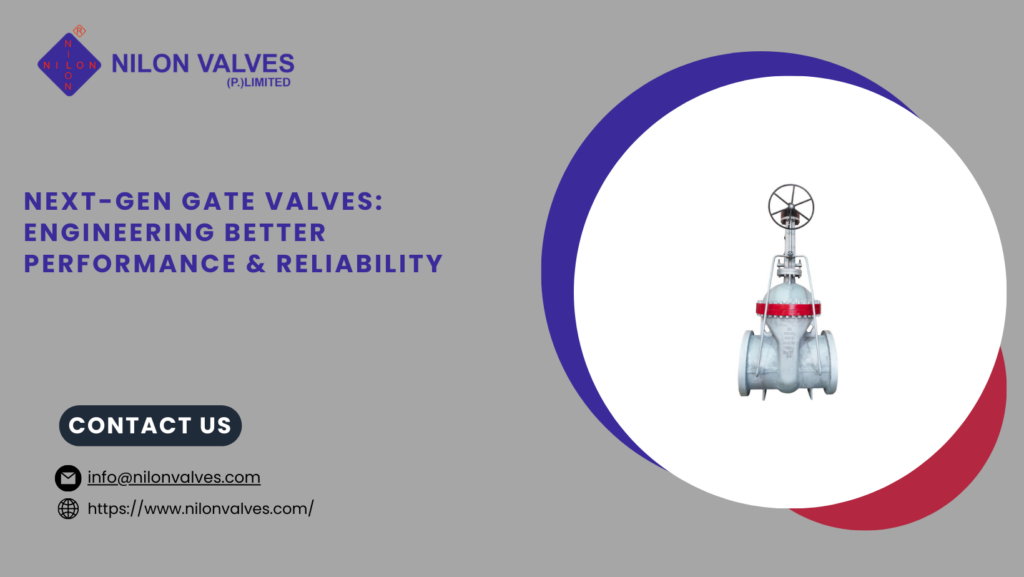
Enter next-generation gate valves—engineered with advanced materials, precision manufacturing, smart automation capabilities, and enhanced sealing technologies. These innovations are transforming the way industries manage fluid control, offering improved durability, higher performance, reduced maintenance costs, and greater operational reliability.
Understanding the Role of Gate Valves in Industry
Gate valves are primarily used for on/off control of fluid flow. Unlike globe valves that regulate flow, gate valves are designed to either fully open or fully close. When fully open, they allow unrestricted flow with minimal pressure loss, making them ideal for applications where straight-line flow and low resistance are critical.
They are commonly used in:
- Oil & Gas pipelines
- Water supply and wastewater treatment plants
- Power generation facilities
- Chemical and petrochemical industries
- HVAC systems
- Fire protection systems
Why Industries Demand Next-Gen Gate Valves
Modern industrial systems operate under extreme conditions:
- High pressure and temperature
- Corrosive or abrasive fluids
- Continuous 24/7 operations
- Strict environmental and safety regulations
- Increasing automation requirements
Traditional valve designs may struggle to withstand these demands over time. Failures can result in production downtime, environmental hazards, and financial losses. Next-gen gate valves are engineered to overcome these challenges through material innovation, smarter design, and improved manufacturing precision.
Key Engineering Innovations in Next-Gen Gate Valves
1. Advanced Material Selection
One of the most significant improvements in modern gate valves is the use of high-performance materials. Manufacturers now use:
- Duplex and super duplex stainless steels
- Alloy steels for high-temperature service
- Corrosion-resistant coatings
- Hardened trim materials
- Elastomers with improved chemical resistance
These materials enhance durability, resist corrosion, and extend service life—even in aggressive environments such as offshore oil platforms or chemical plants.
2. Improved Sealing Technology
Leakage prevention is critical in industrial systems. Next-gen gate valves incorporate:
- Enhanced seat design for tighter shut-off
- Resilient seated configurations
- Metal-to-metal seating for high-temperature use
- Low-emission packing systems
3. Precision Manufacturing & CNC Machining
Modern production techniques ensure higher dimensional accuracy and better surface finishes. CNC machining and automated quality inspection systems reduce manufacturing defects and ensure:
- Perfect alignment of gate and seat
- Reduced friction during operation
- Longer service intervals
- Consistent performance across batches
Precision engineering directly contributes to improved valve reliability.
Automation & Smart Integration
1. Actuator Compatibility
Next-gen gate valves are designed to seamlessly integrate with electric, pneumatic, or hydraulic actuators. This allows remote operation and automated control in large-scale industrial systems.
2. IoT-Enabled Monitoring
With Industry 4.0 adoption increasing, valves are becoming smarter. Modern gate valves can be equipped with:
- Position indicators
- Pressure and temperature sensors
- Predictive maintenance systems
- Digital monitoring dashboards
3. Data-Driven Maintenance
Predictive maintenance reduces unnecessary shutdowns and extends valve lifespan. Instead of reactive maintenance, industries now rely on data insights to schedule servicing only when needed.
Reliability in High-Pressure & High-Temperature Applications
Industries such as oil & gas and power generation operate under extreme conditions. Next-gen gate valves are engineered to:
- Withstand thermal expansion
- Maintain sealing under fluctuating pressure
- Resist fatigue from repeated cycles
- Handle steam and aggressive chemicals
High-temperature packing materials and reinforced body construction ensure long-term performance in demanding environments.
Cost Efficiency Over Lifecycle
While next-gen gate valves may involve a slightly higher initial investment, their lifecycle cost is significantly lower due to:
- Reduced maintenance frequency
- Fewer breakdowns
- Lower downtime costs
- Improved operational efficiency
- Extended replacement intervals
Industries are increasingly shifting focus from purchase price to total cost of ownership (TCO), making advanced gate valves a smarter long-term investment.
Challenges in Gate Valve Engineering
Despite advancements, manufacturers must overcome challenges such as:
- Balancing strength and weight
- Preventing galling in metal-seated designs
- Managing thermal expansion
- Ensuring compatibility with automation systems
Continuous research and development help address these engineering complexities.
The Future of Gate Valve Technology
The future of gate valves lies in:
- Fully digitalized monitoring systems
- AI-driven predictive maintenance
- Advanced composite materials
- 3D-printed valve components
- Enhanced corrosion-resistant coatings
Conclusion
Next-generation gate valves represent a significant leap forward in industrial flow control technology. With enhanced materials, improved sealing systems, precision engineering, automation compatibility, and smart monitoring capabilities, they deliver superior performance and unmatched reliability.
In today’s competitive industrial landscape, efficiency, safety, and sustainability are critical. Investing in next-gen gate valves is not just about upgrading equipment—it’s about optimizing operations, reducing risk, and ensuring long-term operational success.
Also Read: How IoT-Enabled Valves Are Transforming Process Industries