
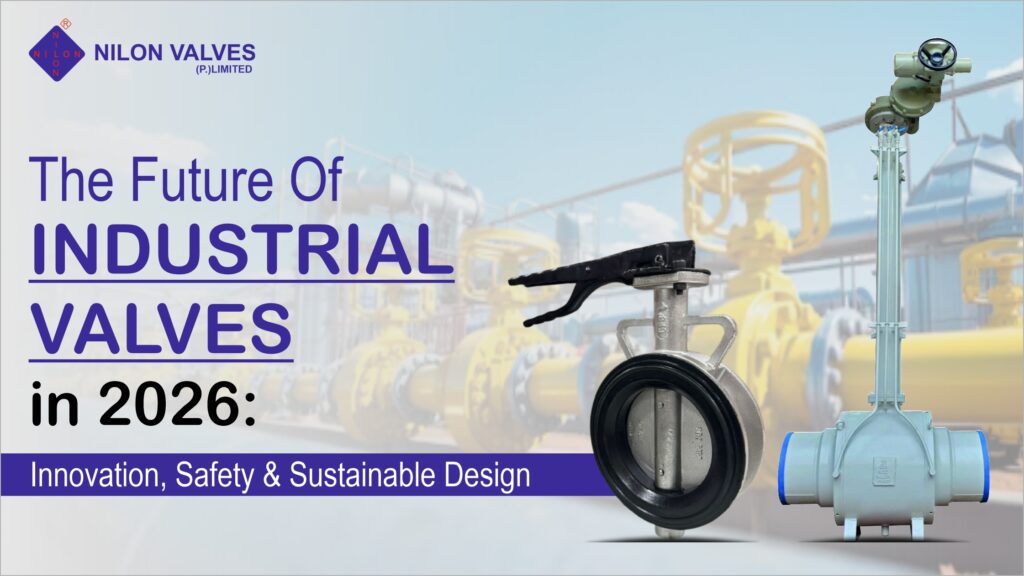
As global industries move toward smarter, safer, and more sustainable operations, industrial valves are no longer seen as simple mechanical components. In 2026, valves play a strategic role in ensuring operational efficiency, regulatory compliance, digital transformation, and environmental responsibility. From oil & gas and power generation to chemicals, water treatment, and emerging clean energy sectors, valve technology is rapidly evolving to meet new challenges. Manufacturers, EPC contractors, and plant operators are increasingly demanding high-performance valves that deliver reliability under extreme conditions, integrate with digital systems, and support sustainability goals. This blog explores the key industrial valve trends to watch in 2026, focusing on innovation, safety, and sustainability, and how these trends are shaping the future of flow control across industries.
1. Rise of Smart Valves and Digital Integration
One of the most significant trends shaping the valve industry in 2026 is the widespread adoption of smart valves. These valves are integrated with sensors, actuators, and digital communication systems that allow real-time monitoring and control.
Key Developments:
- Integration with Industrial Internet of Things (IIoT)
- Real-time data on pressure, temperature, flow, and valve position
- Remote operation and diagnostics
- Seamless connection with SCADA, DCS, and plant management systems
2. Predictive Maintenance and Condition Monitoring
Traditional reactive maintenance models are rapidly being replaced by predictive maintenance strategies. Valve failures can lead to costly shutdowns, safety hazards, and environmental damage. As a result, condition monitoring is becoming a standard expectation.
Benefits of Predictive Maintenance:
- Early detection of wear, corrosion, or leakage
- Reduced maintenance costs
- Extended valve service life
- Improved plant safety and reliability
3. Enhanced Focus on Safety and Compliance
Safety remains a top priority in industrial operations, and valve design plays a crucial role in preventing accidents and ensuring regulatory compliance. In 2026, stricter international standards and safety regulations are influencing valve manufacturing and selection.
Safety-Driven Valve Innovations:
- Fire-safe and anti-static valve designs
- Fugitive emission control to prevent leakage
- Emergency shutdown (ESD) valve systems
- Fail-safe actuators with quick response times
4. Sustainability and Low-Emission Valve Solutions
Sustainability is no longer optional—it is a strategic requirement. In 2026, industrial valves are being designed to support environmental, social, and governance (ESG) goals by minimizing emissions, reducing energy consumption, and improving efficiency.
Sustainability Trends in Valves:
- Low-emission and zero-leakage designs
- Environmentally friendly sealing materials
- Valves designed for energy-efficient operation
- Long-life products that reduce replacement frequency
5. Advanced Materials for Extreme Conditions
As industries operate under increasingly demanding conditions, material innovation is becoming a key trend in 2026. Valves must withstand high pressures, extreme temperatures, corrosive media, and abrasive environments.
Popular Material Innovations:
- High-performance alloys and stainless steels
- Duplex and super duplex materials
- Special coatings for corrosion and erosion resistance
- Non-metallic and composite materials for specific applications
6. Customization and Application-Specific Valve Design
Standard, one-size-fits-all valve solutions are no longer sufficient. In 2026, end users demand customized valve solutions tailored to specific processes, media, and operating conditions.
Customization Trends:
- Valves designed for specific industry applications
- Custom end connections and actuation options
- Application-specific sealing and trim designs
- Compact and lightweight valve configurations
7. Growth of Valves for Clean Energy and Emerging Sectors
In 2026, sectors such as hydrogen, LNG, renewable energy, and carbon capture are driving demand for specialized valve solutions.
Emerging Applications:
- Hydrogen-compatible valves with advanced sealing
- Cryogenic valves for LNG applications
- Valves for biofuels and renewable energy plants
- High-integrity valves for carbon capture and storage (CCS)
These applications require high-performance valves that meet strict safety and material compatibility requirements, making innovation essential.
8. Automation and Actuated Valve Systems
Automation continues to transform industrial processes, and valves are at the heart of this shift. In 2026, the demand for actuated valves—both electric and pneumatic—is growing rapidly.
Automation Trends:
- Increased use of electric actuators for energy efficiency
- Integration with smart control systems
- Compact actuated valve assemblies
- Improved response time and accuracy
9. Quality, Traceability, and Lifecycle Management
Buyers in 2026 are placing greater emphasis on product quality, documentation, and lifecycle support. Valves are expected to deliver consistent performance throughout their operational life.
Key Expectations:
- Full material and test certification
- Digital documentation and traceability
- Long-term availability of spare parts
- Technical support and after-sales service
10. Indian Valve Manufacturers on the Global Stage
India is emerging as a global hub for industrial valve manufacturing. In 2026, Indian manufacturers are competing internationally by offering high-quality products, competitive pricing, and compliance with global standards.
The Driving Forces Behind Industrial Valve Trends in 2026
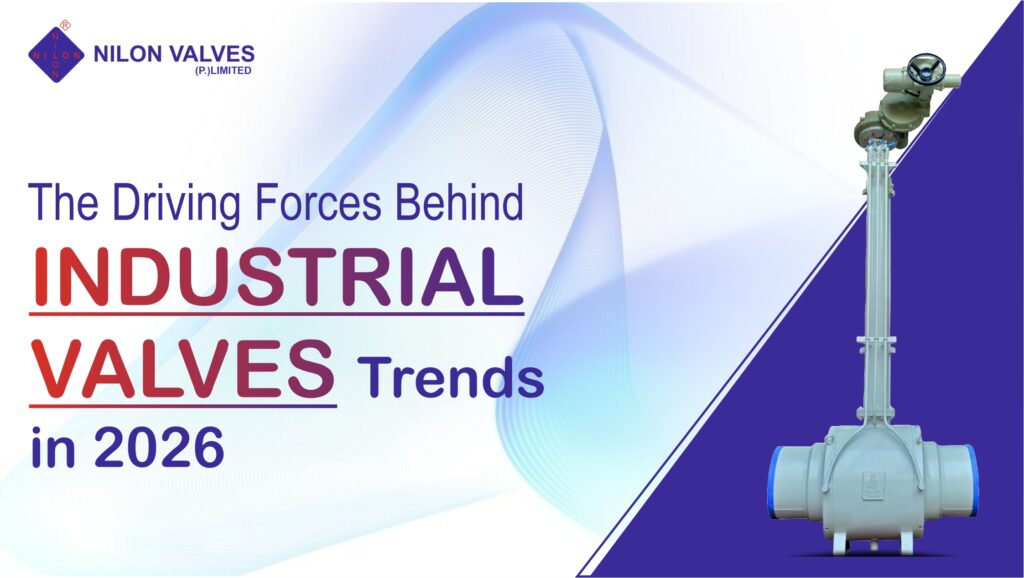
In 2026, industrial valve trends are being driven by rapid technological advancement, stricter safety regulations, and a global push toward sustainable industrial practice. Industries are operating under higher pressure to improve efficiency, reduce emissions, and ensure uninterrupted operations, making valves a critical component in achieving these goals. Digitalization, automation, and smart monitoring technologies are transforming traditional valve systems into intelligent flow control solutions, while evolving safety standards are pushing manufacturers to enhance design reliability and compliance. At the same time, sustainability initiatives and ESG commitments are encouraging the adoption of low-emission, energy-efficient, and long-life valve solutions, positioning innovation, safety, and environmental responsibility as the core forces shaping the future of industrial valves.
In addition to technological progress, regulatory pressure is a major force influencing industrial valve trends in 2026. Governments and international bodies are enforcing stricter standards related to safety, emissions, and operational transparency. Industries handling hazardous, high-pressure, or high-temperature fluids are required to adopt valves that meet advanced compliance norms, pushing manufacturers to invest in rigorous testing, certification, and quality assurance. Compliance is no longer just a requirement—it has become a competitive differentiator.
Conclusion
As industries move toward smarter operations and more responsible practices, industrial valves are emerging as critical enablers of innovation, safety, and sustainability in 2026. The evolution of smart valve technologies, advanced materials, automation, and predictive maintenance is transforming traditional flow control systems into intelligent, high-performance assets. At the same time, stricter safety regulations and growing environmental expectations are driving the adoption of low-emission, reliable, and compliance-ready valve solutions across all major industries.
Looking for the right industrial valve solution for your application?
Contact Nilon Valves today.
Which industries require industrial valves the most?
The major industries include Oil & Gas, Chemical & Petrochemical, Power Generation, Water & Wastewater Treatment, Pharmaceuticals, Food & Beverage, Mining, and Infrastructure. These industries rely on industrial valves to ensure safe, efficient, and reliable operations.
Are you an industrial valve manufacturer or supplier?
We are a trusted industrial valve manufacturer and supplier, offering a comprehensive range of high-quality valves designed to meet international standards.
What is the difference between a ball valve and a butterfly valve?
A ball valve uses a rotating ball with a bore to control flow and is ideal for applications requiring tight shut-off and high-pressure handling. A butterfly valve, on the other hand, uses a rotating disc and is best suited for large-diameter pipelines, offering lightweight design, quick operation, and cost efficiency. The choice depends on application requirements such as pressure, temperature, and space constraints.
Do you supply industrial valves across India and internationally?
Yes, Nilon Valves supplies high-quality industrial valves across India and to international markets. With a strong manufacturing base and a reliable logistics network, Nilon Valves ensures timely delivery, export-ready packaging, and full compliance with international standards.
Why choose your company as an industrial valve manufacturer?
We stand out as an industrial valve manufacturer due to our commitment to quality, engineering excellence, and customer satisfaction. Our valves are manufactured using advanced technology, high-grade materials, and rigorous testing procedures.