
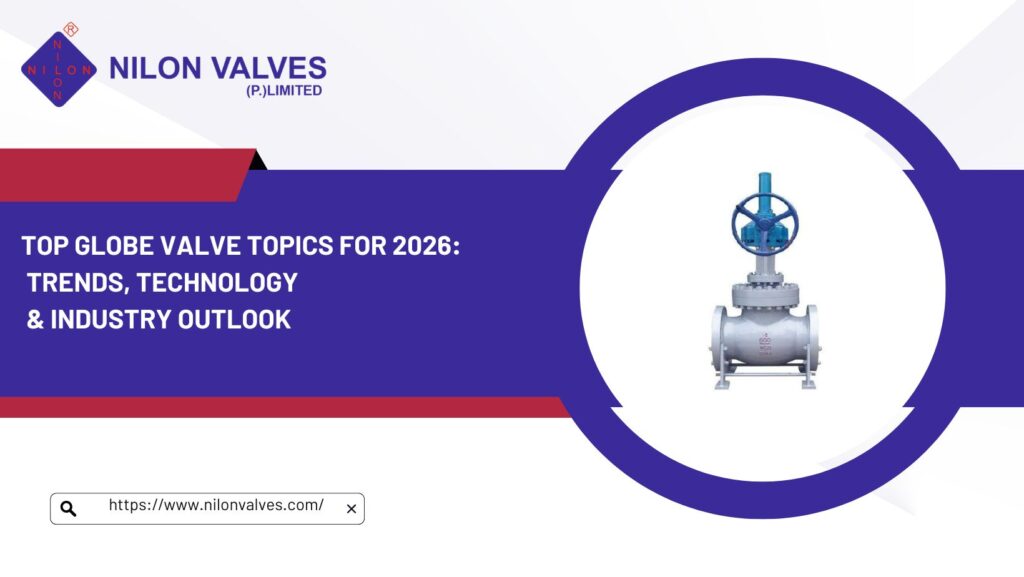
As industries move toward smarter, cleaner, and more efficient operations, globe valves continue to play a critical role in precise flow regulation. In 2026, globe valve demand is being reshaped by automation, sustainability goals, advanced materials, and digital transformation across power, oil & gas, chemicals, water treatment, and process industries.
This blog explores the top globe valve topics for 2026, highlighting emerging trends, buyer expectations, and how manufacturers are adapting to future-ready industrial requirements.
1. Smart Globe Valves & Industry 4.0 Integration
One of the biggest trends for 2026 is the rise of smart globe valves. Integrated with IoT sensors, actuators, and digital control systems, these valves allow:
- Real-time flow monitoring
- Remote operation and diagnostics
- Predictive maintenance alerts
- Improved plant efficiency and safety
Smart globe valves are becoming essential in automated plants where downtime and manual intervention must be minimized.
2. Automation & Advanced Actuator Technologies
Automation is no longer optional. In 2026, globe valves are increasingly paired with:
- Electric actuators for precise control
- Pneumatic actuators for fast response
- Smart actuators with position feedback
This trend supports better throttling accuracy, reduced human error, and seamless integration with DCS and SCADA systems.
3. Sustainability & Energy Efficiency in Valve Design
With stricter environmental regulations and global sustainability goals, globe valves in 2026 are designed to:
- Reduce energy loss in fluid systems
- Minimize leakage and emissions
- Support efficient steam and fluid control
Industries are prioritizing globe valves that contribute to lower carbon footprints and long-term operational efficiency.
4. Advanced Materials for Harsh Industrial Applications
Material innovation is a key topic for 2026. Globe valves are increasingly manufactured using:
- Stainless steel for corrosion resistance
- Alloy steel for high-pressure and high-temperature service
- Special trims for aggressive and chemical media
These materials extend valve life, reduce maintenance costs, and improve reliability in demanding environments.
5. Predictive Maintenance & Digital Monitoring
Maintenance strategies are shifting from reactive to predictive. In 2026, globe valves are equipped with:
- Condition monitoring sensors
- Data-driven maintenance insights
- Early failure detection
This approach helps industries reduce unplanned shutdowns and optimize maintenance schedules.
6. Custom-Engineered Globe Valve Solutions
Standard valves don’t always fit complex applications. A major trend for 2026 is customized globe valve manufacturing, including:
- Special sizes and pressure ratings
- Customized end connections
- Application-specific trim designs
Global buyers increasingly seek manufacturers who can deliver engineered-to-order valve solutions.
7. Rise of Indian Globe Valve Manufacturers
India continues to emerge as a global manufacturing hub for industrial valves. In 2026, Indian valve manufacturers are gaining recognition for:
- Competitive pricing
- Advanced manufacturing capabilities
- Global export quality standards
This shift is strengthening India’s position in the global valve supply chain.
Conclusion
The globe valve industry in 2026 is defined by technology, sustainability, automation, and precision engineering. From smart valve integration to advanced materials and predictive maintenance, globe valves are evolving to meet the demands of modern industrial systems.
Manufacturers that embrace innovation, quality standards, and customization will lead the market, while industries benefit from improved efficiency, safety, and long-term performance.